
Mud Cleaner Parts
Mud Cleaner Parts
Hydrocyclones
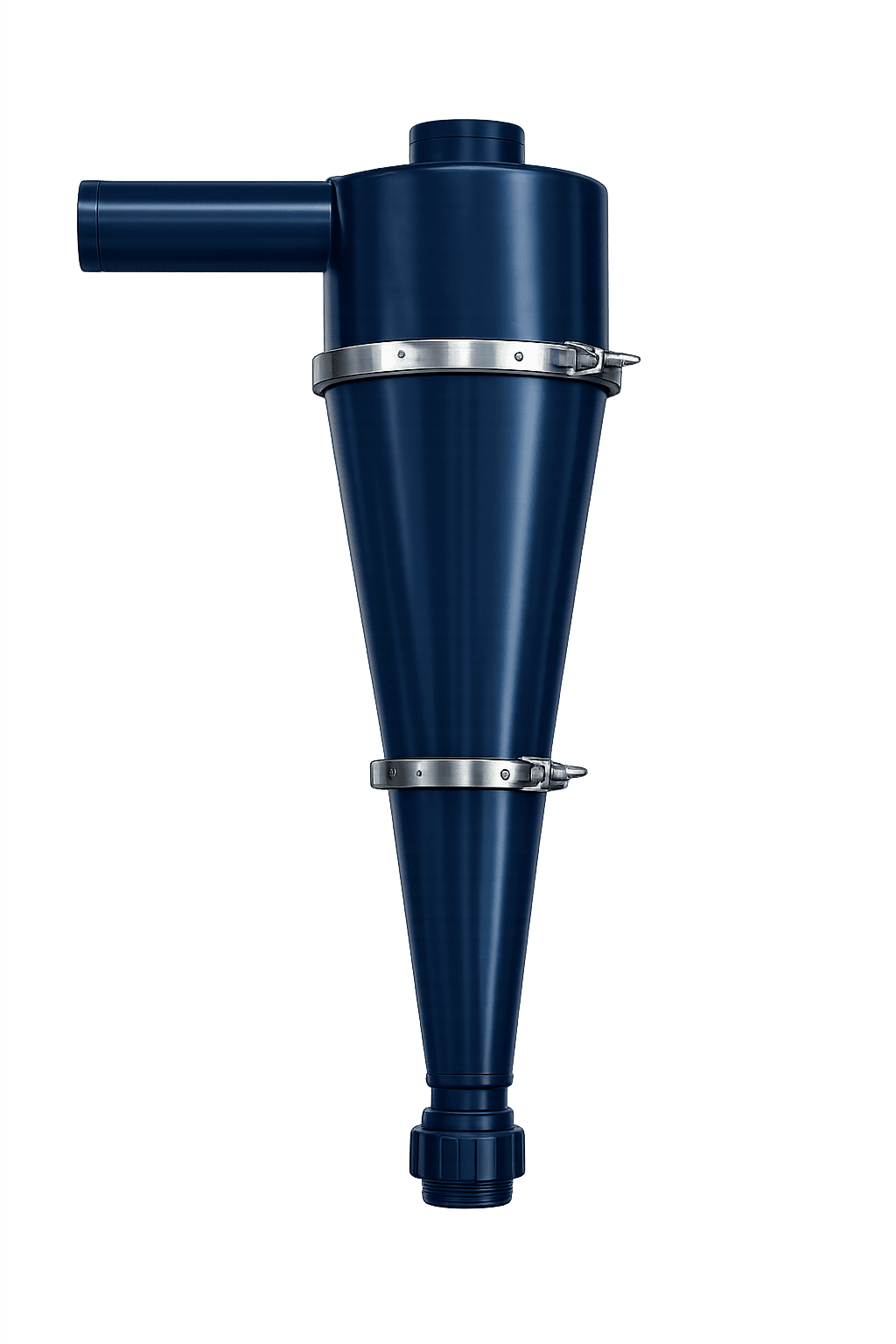
Bulk Coarse Separation
Designed to efficiently remove sand and coarse solids from drilling fluids and slurry in high-capacity mud cleaning and dewatering systems
- Optimized to process 500 GPM per individual cone, maintaining a 50-75µ D₅₀ cut point
- Built to withstand continuous impact of bulk gravel, coarse sand, and heavy organic debris without wearing through the cone walls
- Ideal for dredging, dewatering, and wastewater processing
Part Number: 03-00-382
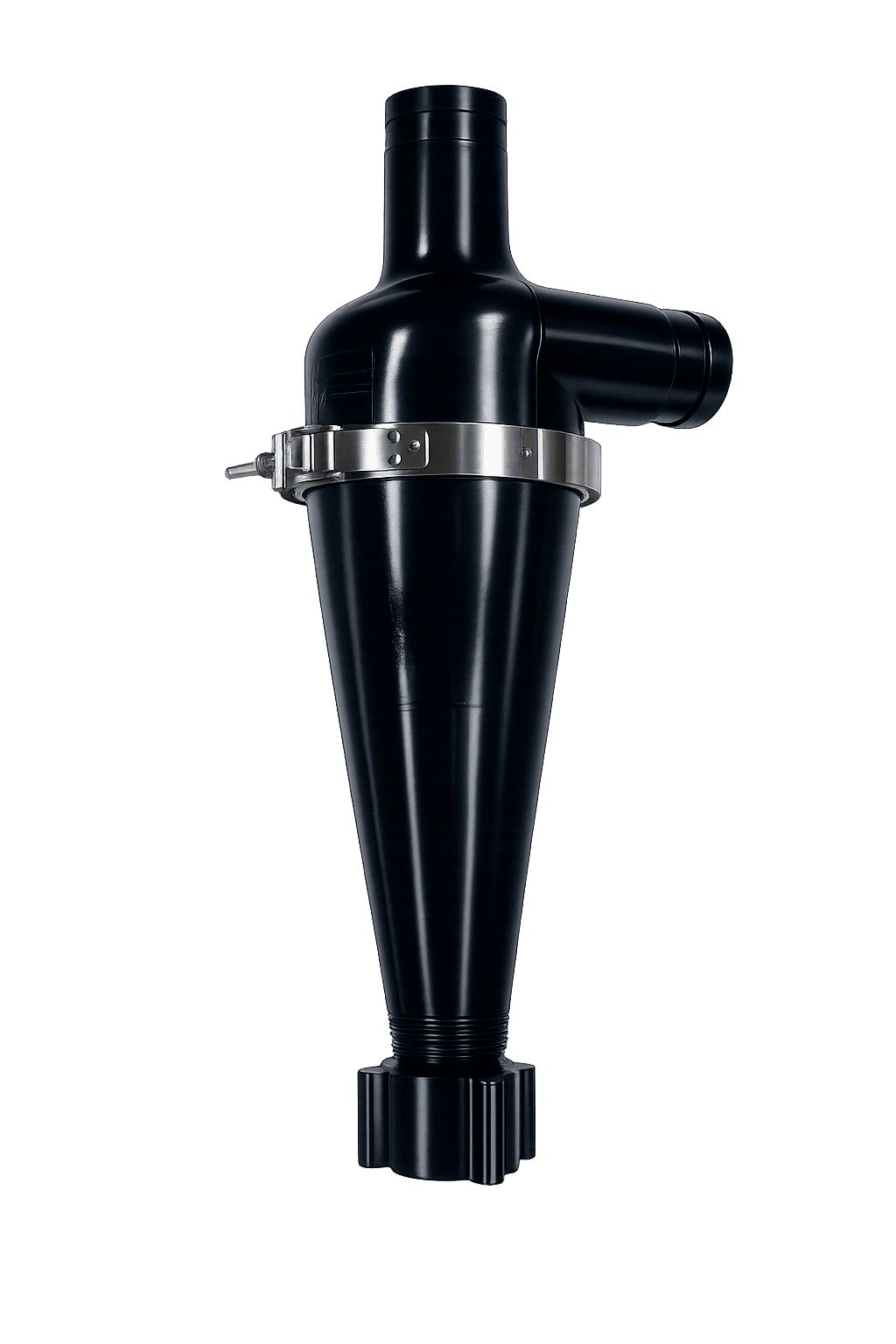
Medium-Fine Desilting
Designed to remove fine sand and silt from drilling fluids and slurry in mud recycling and fluid processing systems.
- Optimized to process 50 GPM per individual cone, maintaining a 15-25µ D₅₀ cut point
- Eliminates fine sand and suspended silt that degrade drilling fluid quality, improving fluid recovery and reducing replacement costs.
- Ideal for HDD, utility installation, foundation drilling, and pipeline construction
Part Number: 03-00-044
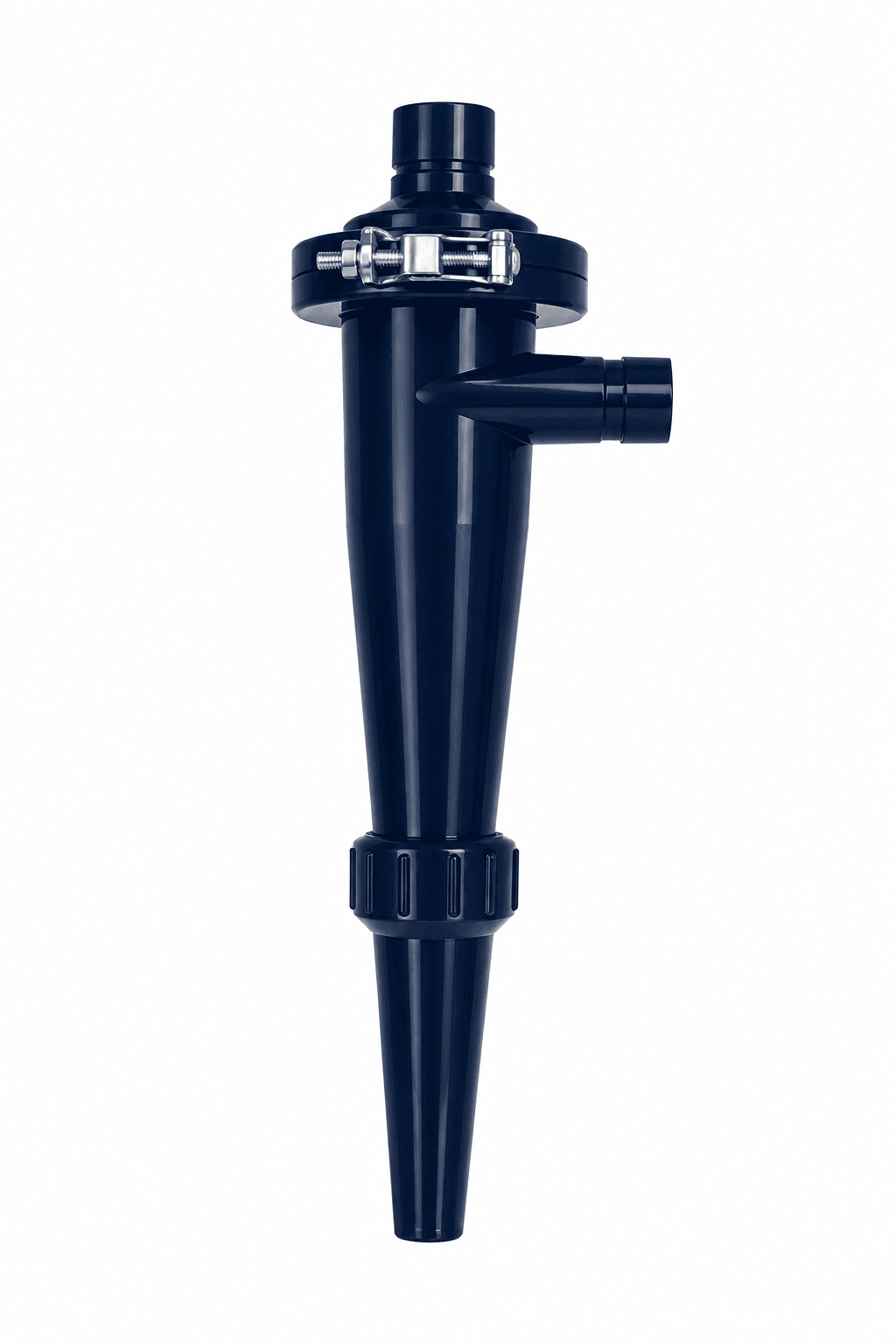
Ultra-Fine Separation
Designed to efficiently separate fine solids from slurry in low-flow industrial fluid handling and dewatering systems
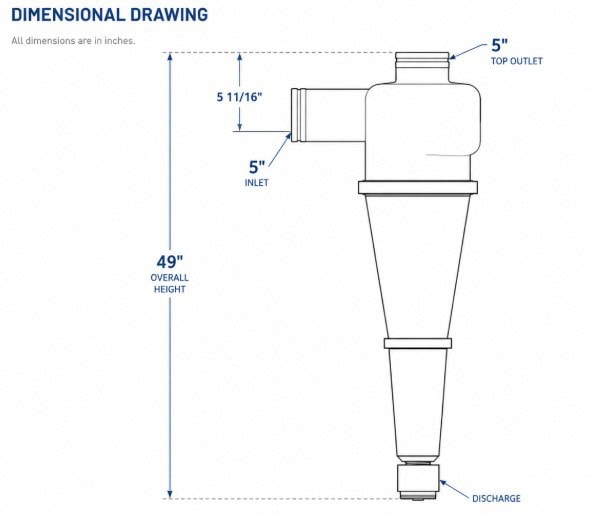
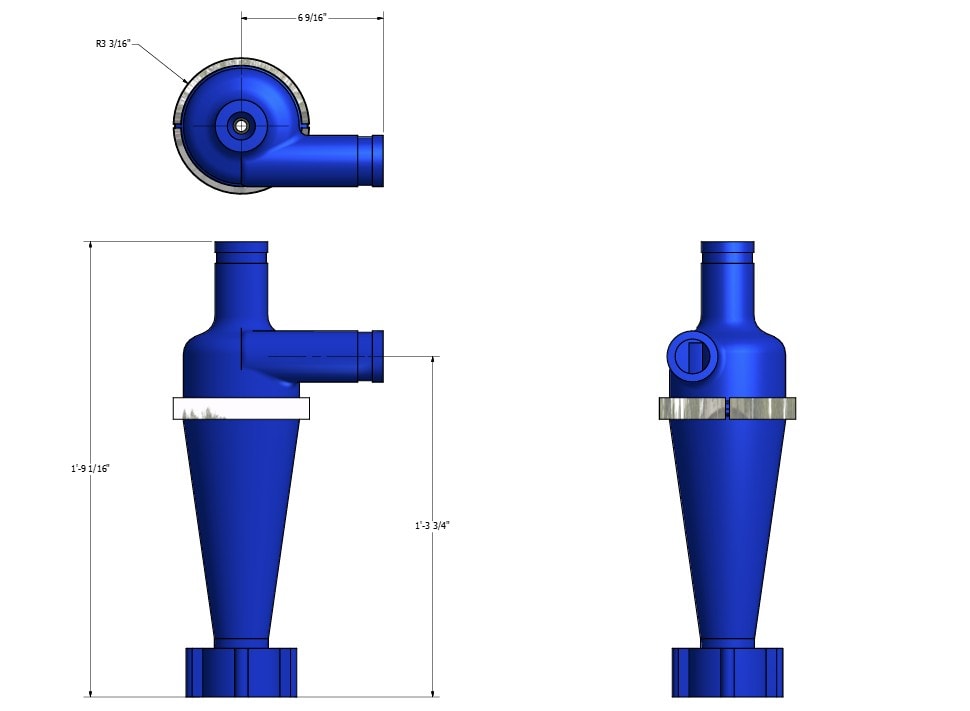
View Dimensions
- Optimized to process 15 GPM per individual cone, maintaining a 2-10µ D₅₀ cut point
- Engineered for ultra-fine clay, slimes, and residual solids recovery and final-stage fluid polishing where maximum particle separation is required
- Ideal for dewatering, fluid clarification and precision slurry processing
Part Number: 03-00-051
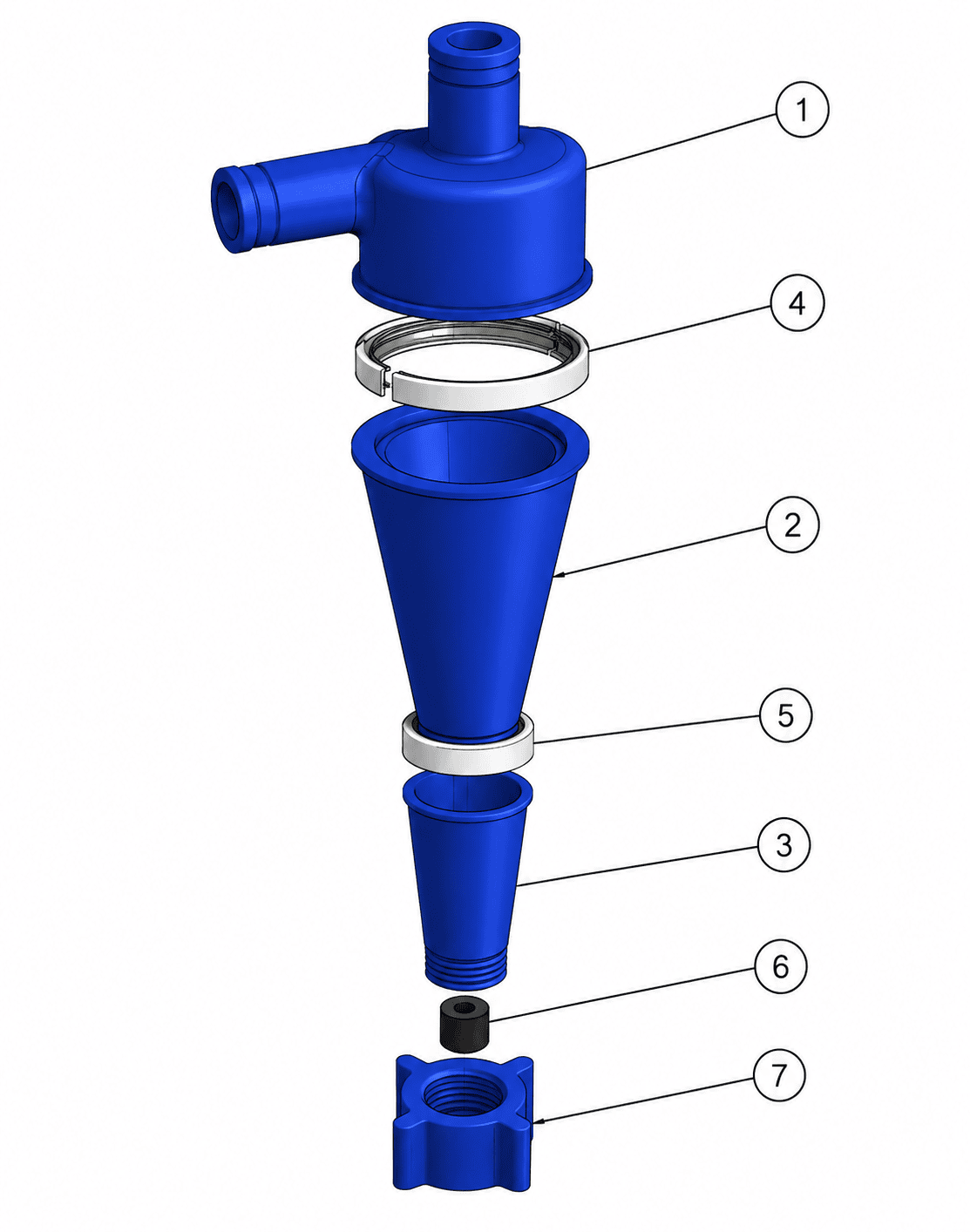
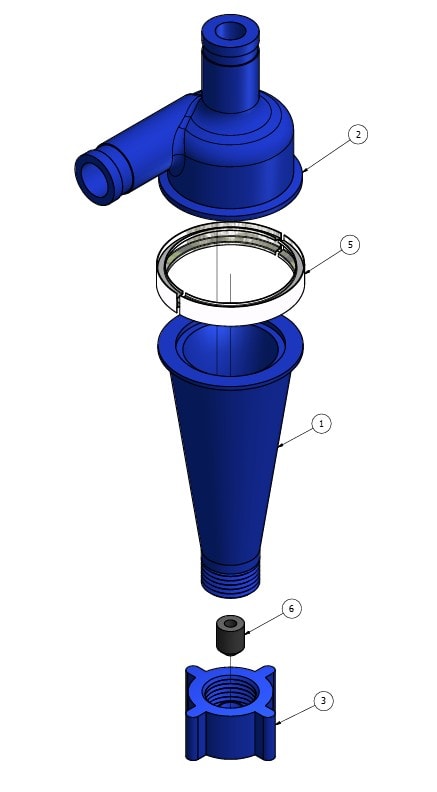
- Lower Cone Section 03-00-046
- Feed Section 03-00-045
- Apex Nut 03-00-047
- —
- 4-inch Cone Steel Band
- Bushing 03-00-048
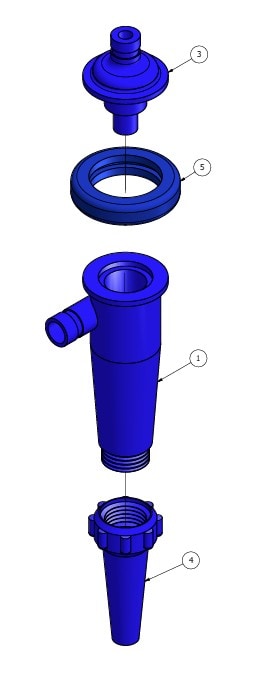
- Cone Section 03-00-056
- —
- Feed Section 03-00-055
- Lower Section 03-00-172
- Clamp 05-00-117
Mud Cleaner Parts
Pressure Gauges
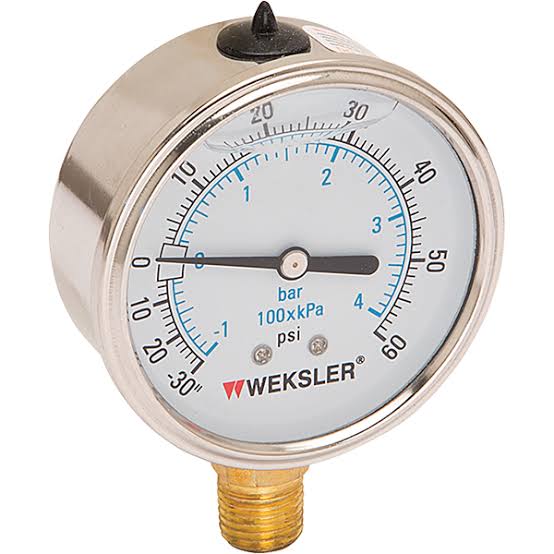
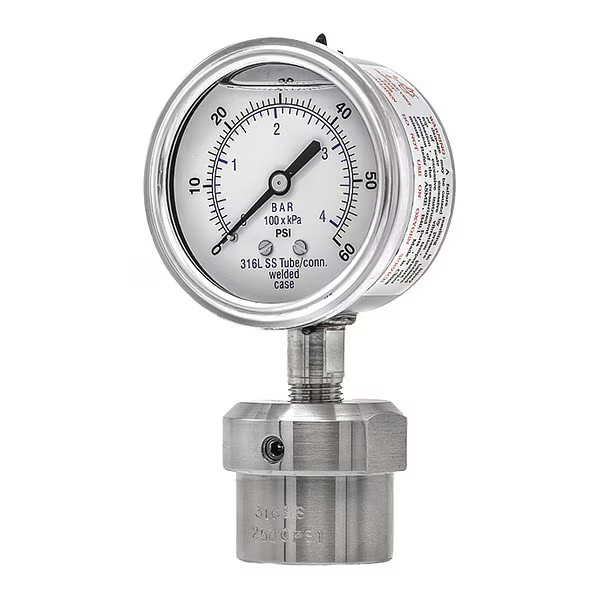
0 - 60 PSI
2 1/2 in. Dial
1/4 in. NPT
Seal Fill Liquid: Glycerin
Part #:
Mud Cleaner Parts
Pipe Couplings & Clamps
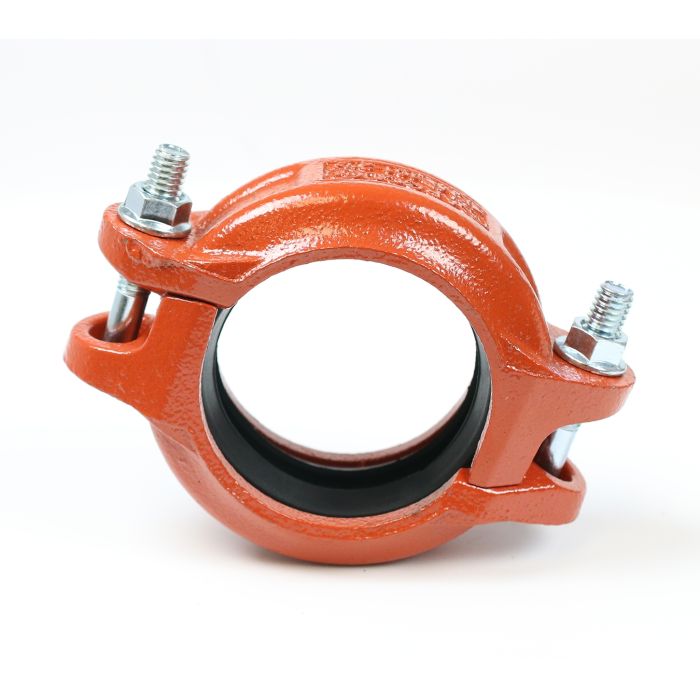
Designed to securely connect 2-inch grooved pipe in industrial fluid handling systems.
- Heavy-duty ductile iron housing
- EPDM gasket provides a dependable leak-resistant seal
- Zinc-plated hardware for corrosion resistance
- Two-bolt design for quick installation and maintenance
- Maximum Working Pressure: 300 psi
Part #: 00-00-047
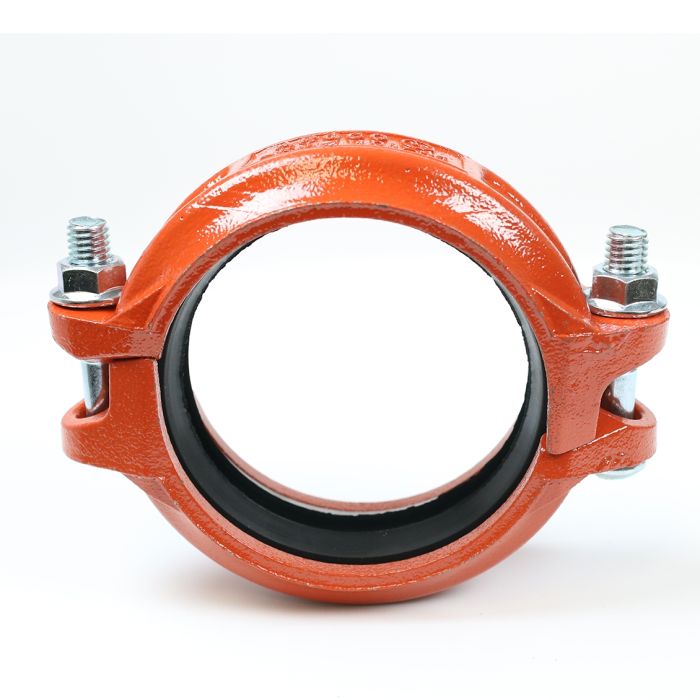
Designed to securely connect 5-inch grooved pipe in industrial fluid handling systems.
- Heavy-duty ductile iron housing
- EPDM gasket provides a dependable leak-resistant seal
- Zinc-plated hardware for corrosion resistance
- Two-bolt design for quick installation and maintenance
- Maximum working Pressure: 300 psi
Part #: 00-00-045
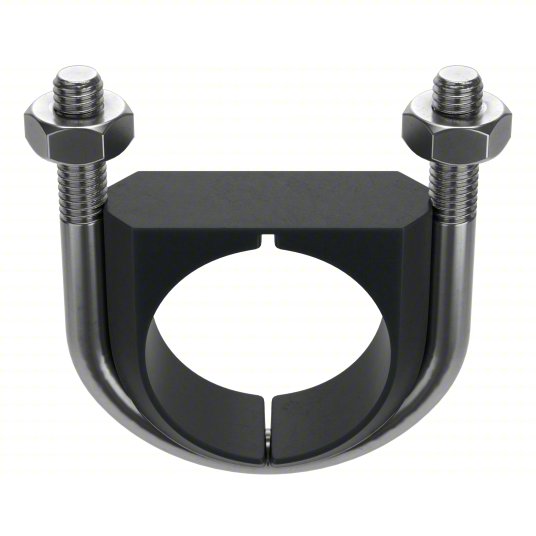
Designed to securely support 2-inch pipe in industrial fluid handling systems
- Cushioned insert reduces vibration and noise
- Helps protect pipe from wear and abrasion
- Nylon-threaded nuts resist loosening
- Heavy-duty steel construction
- Working Load Limit: 1220 lbs.
Part #: 00-02-047
Mud Cleaner Parts
Valves
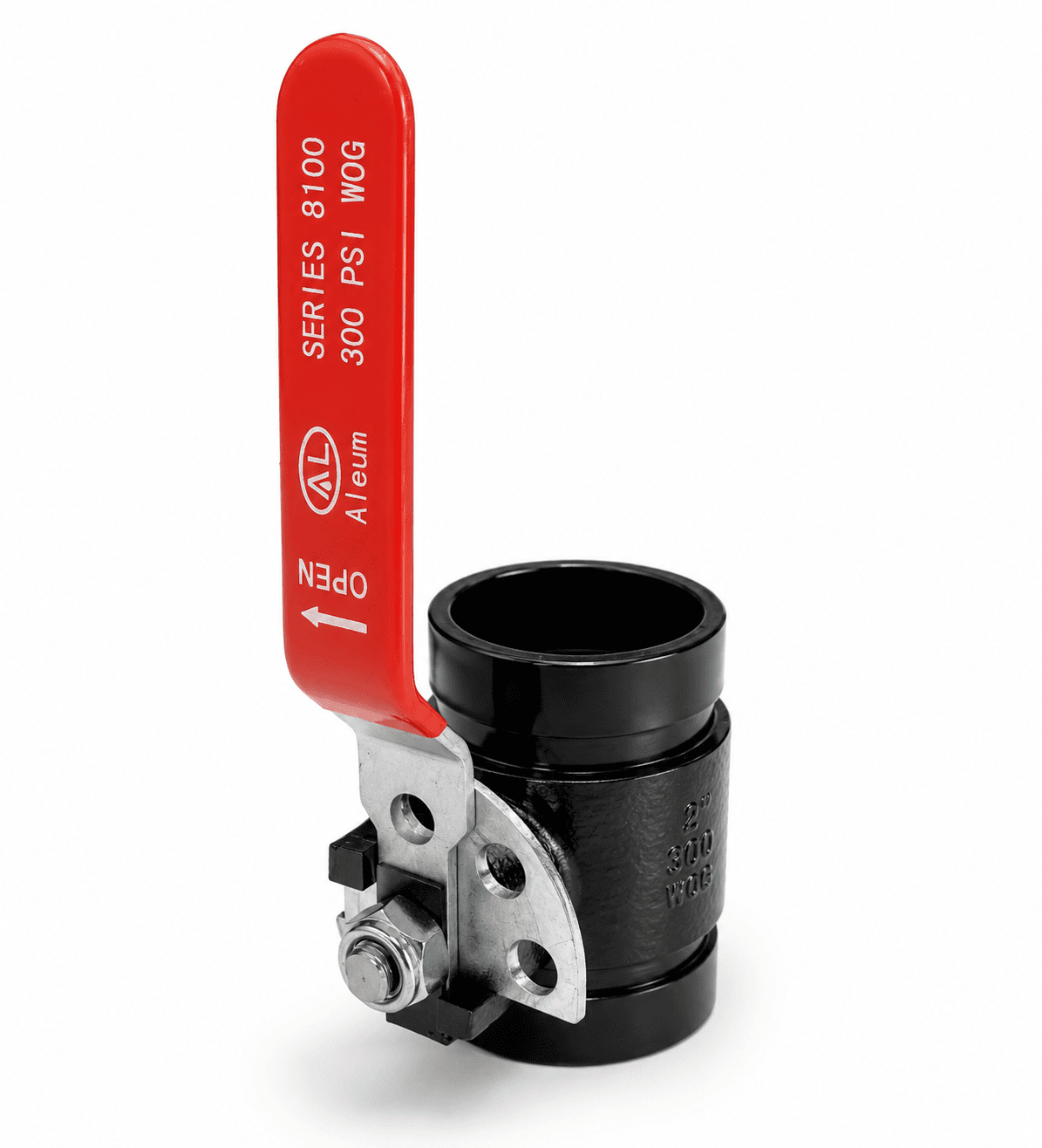
- Maximum Working Pressure: 300 PSI
- Maximum Working Temperature: 230ºF (110ºC)
Part #: 00-00-876
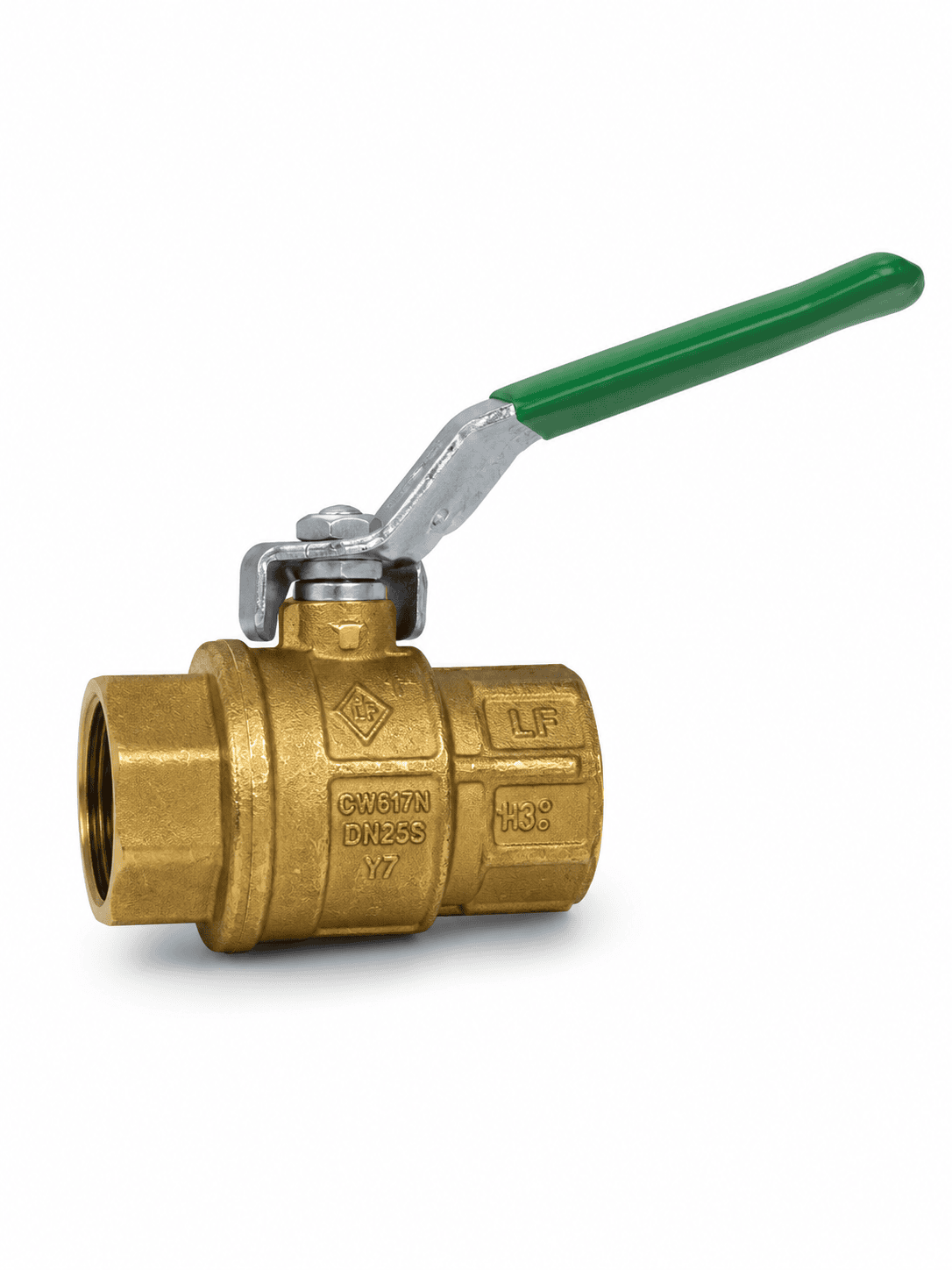
- No-lead brass ball valve feature a full port ball design to ensure maximum flow
- Maximum Working Temperature: 212ºF (100ºC)
Part #: 00-00-890
How many hydrocyclones are needed for a 1,000 GPM or 2,000 GPM system?
System requirements scale dynamically by piping the 500 GPM cones in parallel manifolds:
1,000 GPM Systems: Requires a twin-cone pair of 10-inch hydrocyclones
2,000 GPM Systems: Requires a 4-cone bank of 10-inch hydrocyclones to manage bulk fluid volume.
What are the D₅₀ cut points for 2", 4", and 10" hydrocyclones?
The nominal D₅₀ cut points define the particle size that has a 50% removal efficiency on a single pass:
2" Hydrocyclone: Ultra-fine polishing down to a 2 to 10-micron D₅₀ cut point.
4" Hydrocyclone: Intermediate desilting down to a 15 to 25-micron D₅₀ cut point.
10" Hydrocyclone: Bulk desanding and dewatering down to a 40 to 75-micron D₅₀ cut point.
Why choose solid polyurethane hydrocyclones over steel?
Solid polyurethane offers critical operational advantages over traditional metal or ceramic-lined cones:
Zero Corrosion: Total immunity to chemical attack from municipal wastewater, stormwater runoff, and acidic organic waste.
Extreme Wear Life: High-durometer polyurethane outlasts bare steel when blasted with high-velocity sand, gravel, and abrasive grits.
Easy Maintenance: Lightweight design allows service crews to quickly inspect or swap cones without heavy hoisting equipment.
What are the main environmental uses for a 10-inch hydrocyclone?
The 500 GPM 10-inch cone is specifically engineered for high-volume civil and environmental applications:
Environmental Remediation: Cleaning slurries at contaminated soil washing plants.
Dredging Operations: Separating heavy sand and river silt from lagoon cleanouts.
Stormwater Management: Stripping heavy grit from municipal runoff before it enters holding basins.
Wastewater Treatment: Concentrating primary sludge and separating grit before downstream filtration.
What is the ideal operating pressure (PSI) for 2", 4", and 10" hydrocyclones?
For high-efficiency separation, the feed pump must maintain consistent pressure:
2" Hydrocyclones: Operate at 25 to 40 PSI to generate the massive centrifugal force needed for ultra-fine separation.
4" Hydrocyclones: Typically require 20 to 35 PSI to pull out target silts cleanly.
10" Hydrocyclones: Run efficiently between 15 to 30 PSI (depending on whether the system is set up for high-volume dewatering or classification).
What happens if a hydrocyclone's inlet pressure drops too low?
If feed pressure falls below the minimum target (usually less than 5–10 PSI depending on the unit size):
The internal vortex collapses, preventing the clean liquid and fine particles from rising out the top overflow
Water and fine slurry will begin "spraying" or dumping directly out of the bottom apex, drastically reducing separation efficiency and contaminating your solids
Why are 4-inch hydrocyclones used as "Desilters" on drilling rig mud reclaimers?
A 4-inch polyurethane hydrocyclone provides the ideal mid-range balance for mud reclamation systems. Positioned right after the larger desanding cones, a bank of 4-inch desilter cones removes fine, abrasive silts down to 15 microns. This removes particles that are small enough to pass through shaker screens but large enough to cause extreme wear on downhole drilling tools, mud pumps, and bits.
How does a 2-inch hydrocyclone handle commercial flow rates if its capacity is low?
Because an individual 2-inch cone only processes roughly 15 to 20 GPM, commercial high-volume systems scale by placing them into a radial multi-cyclone manifold or parallel cluster housing. This configuration allows dozens of 2-inch polyurethane cones to share a single feed pump, delivering high-volume processing power while maintaining an ultra-fine micron cut point.