
Types of Environmental Dewatering Systems: Comparing the Triflo ES Series
Environmental dewatering equipment must be selected around the material being processed, the required flow rate, the separation target, and the conditions at the jobsite. Triflo’s ES Series includes four mechanical dewatering systems designed for applications ranging from compact remediation and industrial projects to high-volume dredging, agricultural processing, and environmental restoration..
Quick answer: Triflo manufactures four ES Series environmental dewatering systems. The skidded ES 300 and ES 500 process 300 and 500 GPM with rated cut points down to 10 microns. The Rockover ES 1000R and ES 2000R process 1,000 and 2,000 GPM with rated cut points of 24 microns. Each model uses shaker screens and hydrocyclones to separate solids from water through multiple mechanical separation stages.
Triflo ES Series at a Glance
Every ES Series model combines shaker screens, hydrocyclones, pumps, tanks, piping, and controls into one coordinated processing system.
Incoming slurry first passes over shaker screens that remove larger material. Hydrocyclones then separate progressively finer particles according to particle size, density, and fluid behavior. Additional shaker stages recover water from the hydrocyclone underflow while discharging concentrated solids for collection or further management.
| Model | Processing Rate | Cut Point | Applications |
|---|---|---|---|
| ES 300 | 300 GPM | 10 microns | Remediation, agricultural processing, industrial cleaning, wastewater, and space-constrained projects |
| ES 500 | 500 GPM | 10 microns | Dredging, pond cleanouts, waste processing, industrial projects, and remediation |
| ES 1000R | 1,000 GPM | 24 microns | High-volume remediation, dredging, pit cleanup, sludge recovery, and tank cleanouts |
| ES 2000R | 2,000 GPM | 24 microns | Large-scale dredging, habitat restoration, remediation, agricultural waste, and industrial slurry processing |
Processing rate describes the volume of slurry the equipment is designed to handle. Cut point describes the approximate particle size targeted by the hydrocyclone separation stage under appropriate operating conditions.
Actual separation performance depends on the material, solids concentration, particle density, slurry viscosity, feed pressure, screen selection, and overall equipment configuration.
ES 300: Compact Fine-Solids Separation
The Triflo ES 300 is a compact skidded system that processes 300 GPM with a 10-micron cut point.
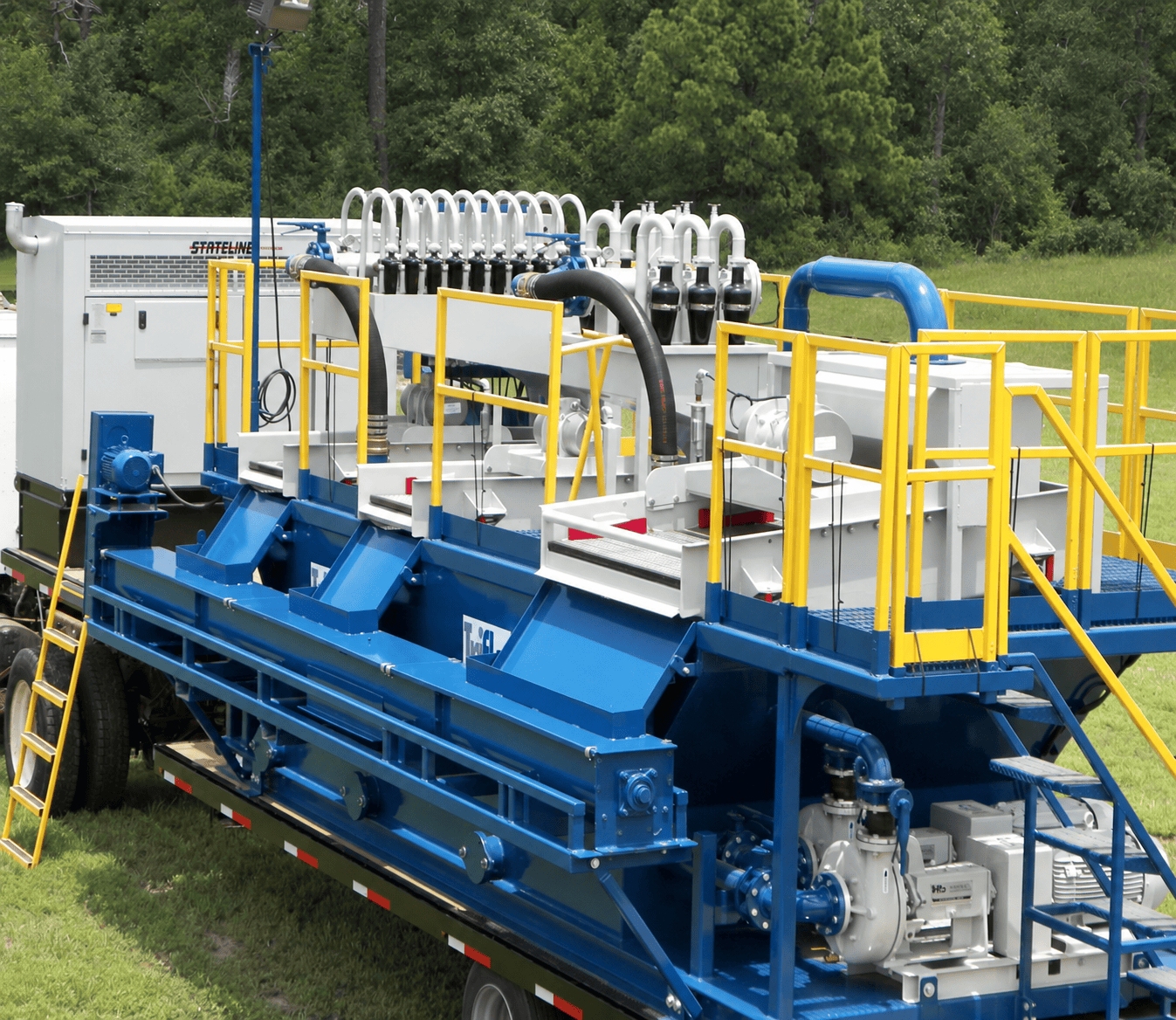
Its smaller footprint supports lower-flow operations that require fine mechanical separation or need to integrate dewatering equipment into a restricted work area.
Best suited for: Environmental and soil remediation, agricultural processing, industrial cleaning, wastewater solids separation, and projects with limited equipment space.
View the ES 300 Datasheet for complete dimensions, power requirements, and equipment specifications.
ES 500: Higher-Capacity Fine Separation
The Triflo ES 500 increases processing capacity to 500 GPM while retaining a rated cut point down to 10 microns.
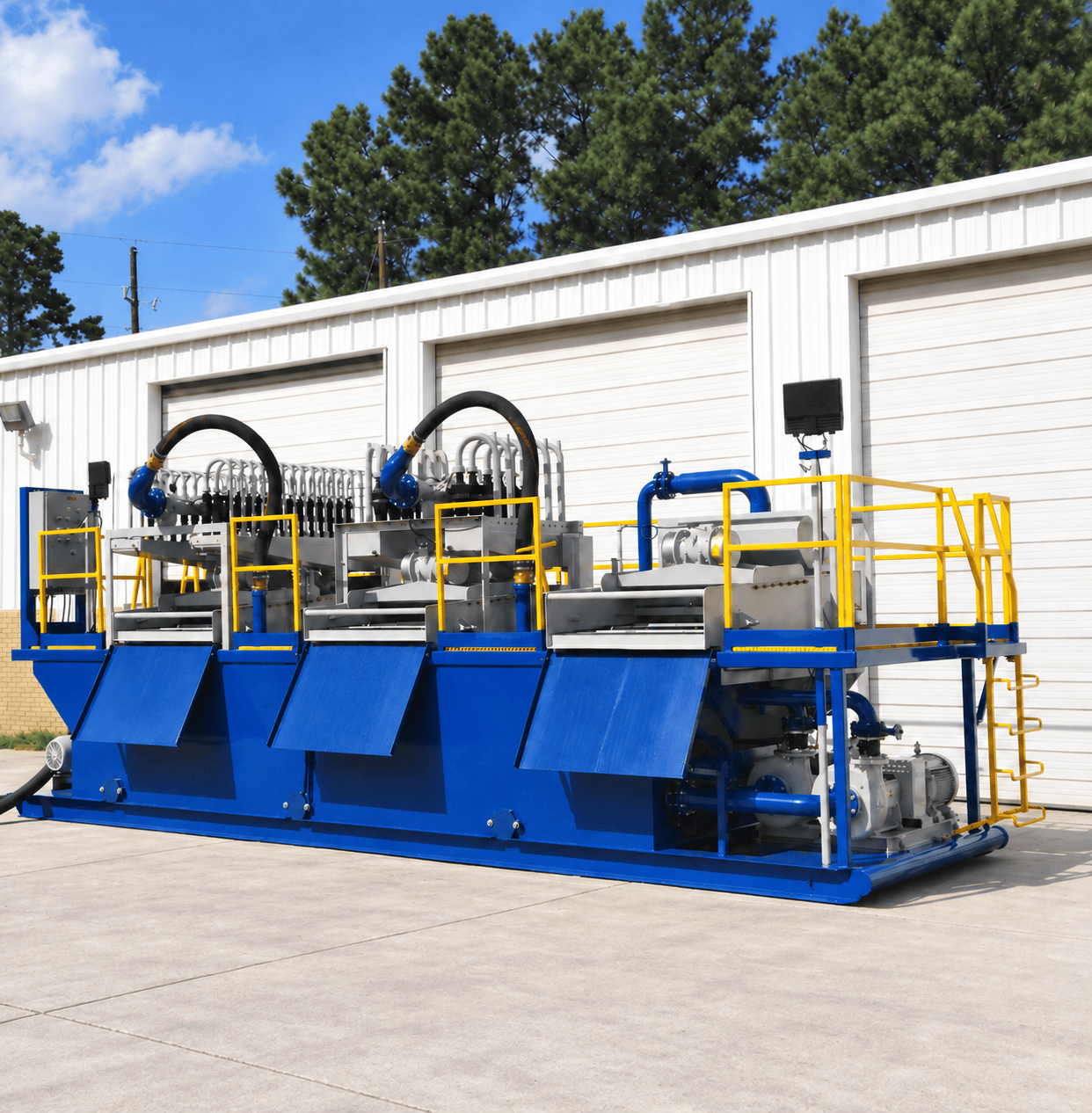
Its three-shaker arrangement and 4,282 gallons of onboard tank capacity provide additional screening and fluid-management capacity for moderate-flow environmental and industrial operations.
Best suited for: Environmental dredging, pond and lagoon cleanouts, soil remediation, industrial cleaning, wastewater solids separation, and waste or sludge processing.
View the ES 500 Datasheet for complete dimensions, power requirements, and equipment specifications.
ES 1000R: High-Flow Rockover Dewatering
The Triflo ES 1000R processes up to 1,000 GPM with a rated cut point of 24 microns.
Its non-permit-load Rockover design and hydraulic jacking system support transportation, positioning, and field setup on high-production projects that require a mobile dewatering system with substantial onboard tank capacity.
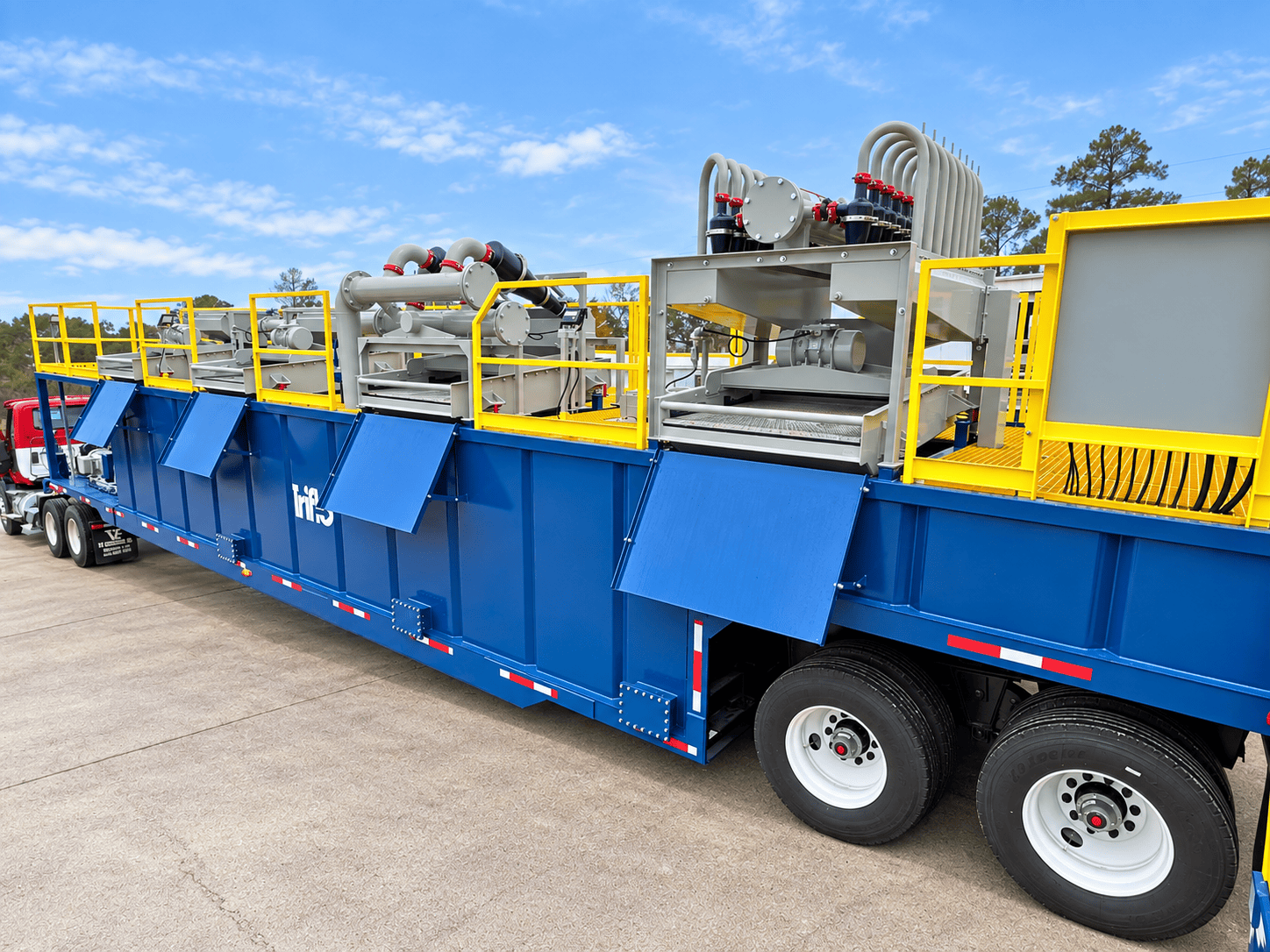
Best suited for: Environmental remediation, hydraulic dredging, pit and tank cleanouts, tank-bottom sludge recovery, industrial slurry management, and other high-volume cleanup operations.
View the ES 1000R Datasheet for complete dimensions, power requirements, and equipment specifications.
ES 2000R: Dewatering for Large-Scale Operations
The Triflo ES 2000R is the highest-capacity system in the ES Series. It processes up to 2,000 GPM with a rated cut point of 24 microns.
Six shakers and multiple desander and desilter hydrocyclones provide the separation capacity needed for operations that continuously deliver large volumes of sediment, sludge, organic waste, or other solids-heavy slurry.
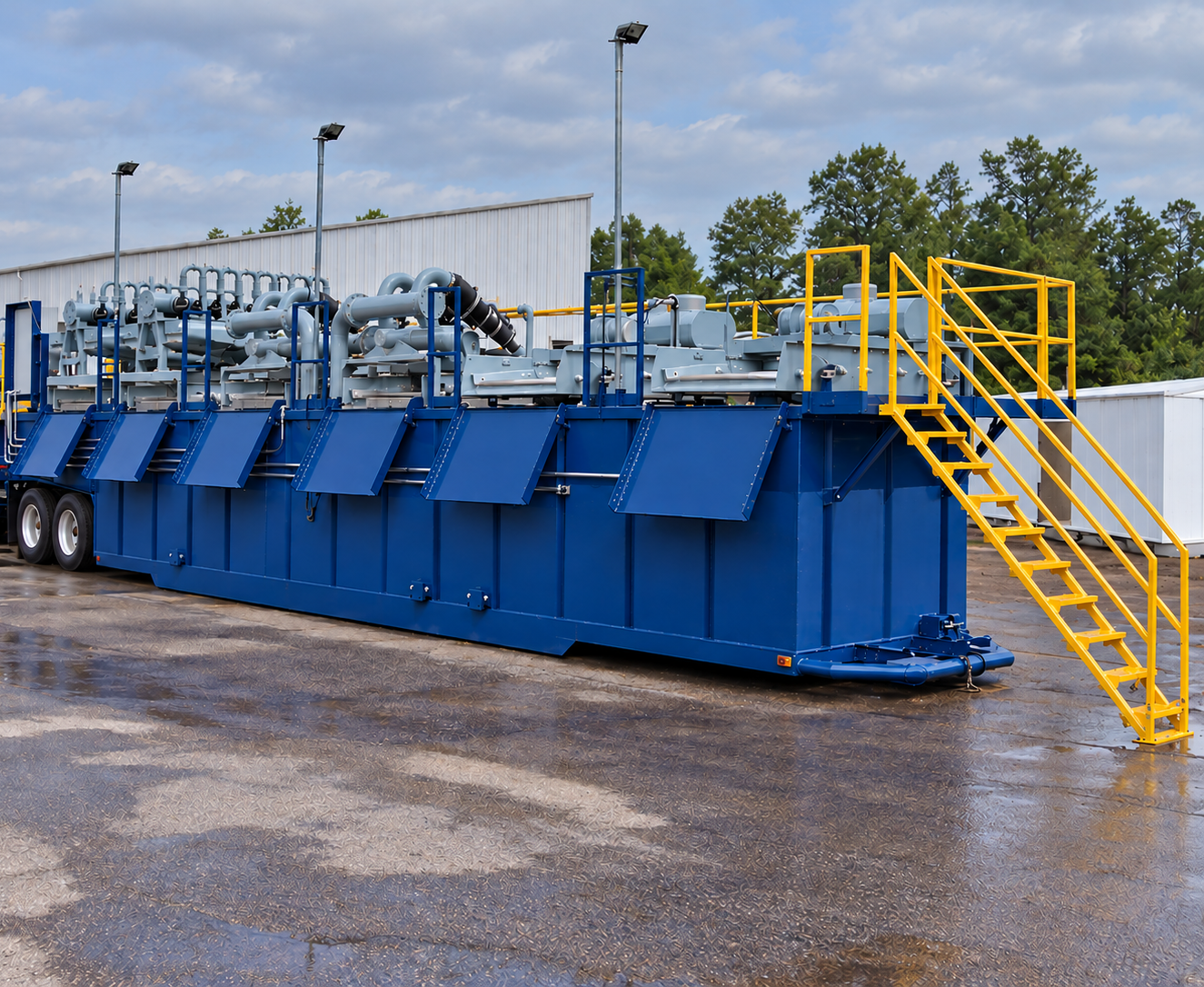
Best suited for: Large-scale hydraulic dredging, waterway and habitat restoration, contaminated-sediment remediation, agricultural waste processing, major pond and lagoon cleanouts, and high-volume industrial slurry operations.
View the ES 2000R Datasheet for complete dimensions, power requirements, and equipment specifications.
Skidded and Rockover Environmental Dewatering Systems
The ES Series is available in skidded and Rockover configurations. The equipment layout determines how the system is transported, positioned, and integrated into the jobsite.
Skidded ES Systems
The ES 300 and ES 500 use compact skidded designs that support modular installation alongside dredges, pumps, vacuum trucks, wastewater equipment, tanks, and other project components.
A skidded system may be appropriate when the equipment will remain at an established processing site or be incorporated into a larger project-specific arrangement.
Rockover ES Systems
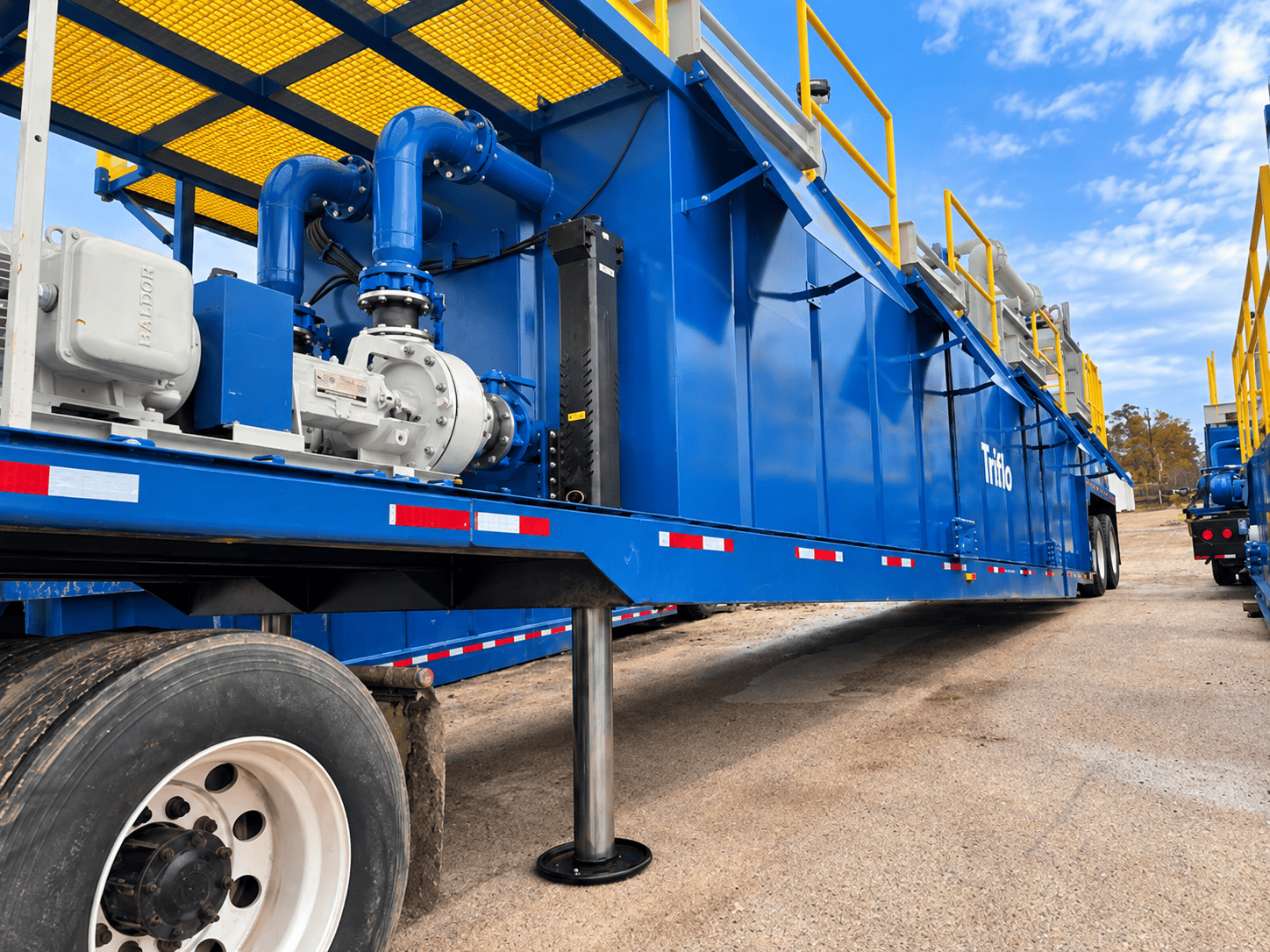
The ES 1000R and ES 2000R use Triflo’s Rockover design for high-flow operations requiring more efficient transportation and field deployment.
Integrated hydraulic jacks raise and lower the unit during loading, unloading, and setup, helping crews transition the equipment between its transport and operating positions, without the need of separate lifting equipment.
Custom-Engineered Environmental Dewatering Systems
The standard ES Series models cover a range of processing rates, footprints, and mobility requirements. When a project falls outside those configurations, Triflo can modify an existing design or engineer and fabricate a custom dewatering system around the application.
Custom systems can be designed around the material being processed, required separation results, jobsite restrictions, operating environment, and surrounding equipment.
Customization options can include:
- Tank size, capacity, compartment arrangement, and equipment layout
- Custom shakers, screen configurations, hydrocyclones, and degassers
- Pump sizes, quantities, placement, and access
- Piping, manifolds, valves, inlets, outlets, and connection points
- Skidded, trailer-mounted, and custom Rockover configurations
- Generators, control panels, remote controls, instrumentation, and lighting
- Explosion-proof or hazardous-location electrical packages
- Tank heaters, pipe insulation, winterization, and weather protection
- Enclosed pump and equipment areas
- Solids-discharge chutes, collection troughs, and hoppers
- Catch pans, drip pans, splash guards, and secondary containment
- Platforms, walkways, ladders, stairs, and handrails
- Custom paint colors, logos, and customer branding
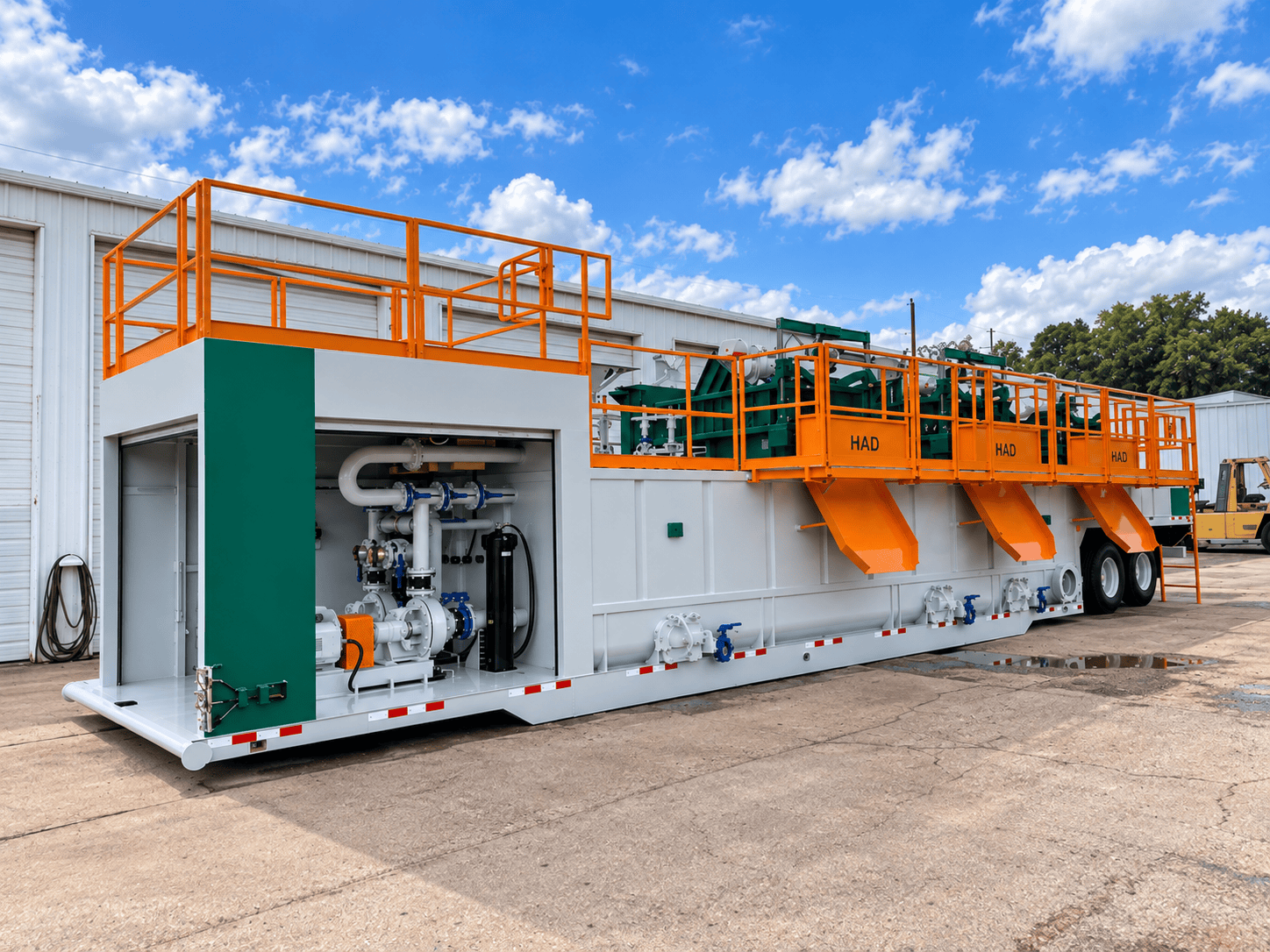
For a recent cold weather project, Triflo engineered a custom Rockover unit featuring a fully enclosed pump porch and roll-up doors to protect the pumps and piping from freezing conditions while preserving access during operation and maintenance.
Whether a project requires a modification to an ES model or a completely different equipment arrangement, Triflo can engineer the system around how the customer needs it to operate.
What Should You Consider When Choosing an Environmental Dewatering System?
Before comparing equipment, consider the material being processed, the approximate volume of slurry, the required separation result, and the conditions at the jobsite. Final specifications and laboratory data may not be available during the early research stage, but a basic understanding of the operation can help narrow the appropriate system type.
Important factors include:
- Material being processed: Sand, silt, sediment, sludge, vegetation, manure, fibers, grit, and other solids behave differently during screening and hydrocyclone separation.
- Required processing rate: Continuous flow and expected production levels help establish the required system capacity.
- Solids concentration: The amount of material in the slurry affects shaker loading, hydrocyclone performance, and solids-discharge volume.
- Particle-size distribution: The range of coarse and fine material helps determine the appropriate screens and hydrocyclones.
- Separation objective: The required condition of the recovered water and solids influences the number and type of separation stages.
- Upstream equipment: Dredges, vacuum trucks, mud pumps, lagoon pumps, and other feed systems affect how slurry reaches the dewatering equipment.
- Downstream material management: Water reuse, sediment recovery, additional treatment, transportation, and disposal requirements affect the complete process arrangement.
- Available footprint and access: The amount of space at the site influences equipment size, positioning, and connection points.
- Mobility requirements: Project logistics help determine whether a skidded, trailer-mounted, or Rockover design is most appropriate.
- Tank capacity: Adequate onboard volume helps maintain circulation and manage changes in incoming flow.
- Available power and operating environment: Electrical capacity, climate, weather exposure, and hazardous-location requirements may affect the equipment design.
Testing a representative material sample can provide additional information about particle sizes, solids concentration, screen performance, and expected separation behavior before the final system is configured.
Find the Right Dewatering System for the Work
The best environmental dewatering system is not necessarily the model with the closest GPM rating. It must also process the actual material, fit the available site, work with the surrounding equipment, and produce water and solids streams that can move into the project’s next stage.
A standard ES model may meet those requirements, or the application may call for modifications or a custom-engineered design.
Triflo can evaluate the complete operation and help identify the equipment arrangement that best fits the work.