
Environmental projects and waste-management operations often produce flowing mixtures of water, sediment, sludge, muck, vegetation, manure, organic matter, and other accumulated solids. Removing or collecting that material is only part of the job. The water and solids must then be separated so each material stream can be managed effectively.
Quick answer: Environmental dewatering is the process of separating water from sediment, sludge, muck, vegetation, organic waste, manure, and other solids generated during dredging, remediation, pond cleanouts, habitat restoration, agricultural waste management, and industrial processing. Mechanical dewatering systems use shaker screens and hydrocyclones to process slurry continuously, recover water, and prepare separated material for reuse, treatment, transportation, energy recovery, or proper disposal.
Environmental dewatering can support projects ranging from restoring manatee habitat and creating new mangrove areas to preparing agricultural waste for biogas production. It is also used to process contaminated sediment, industrial sludge, stormwater-pond material, and sand or silt removed from ports, canals, and navigation channels.
What Is Environmental Dewatering?
Environmental dewatering is the process of separating solid material from the water carrying it during an environmental, agricultural, industrial, or waste-management operation.
The process begins with a water-heavy material such as dredged sediment, pond muck, manure, sludge, vegetation, or industrial waste. Water may already be present in the material, or it may be added so the solids can be pumped as slurry to a processing site.
A mechanical dewatering system separates the slurry into two more manageable material streams:
- Concentrated solids or organic material that can be reused, processed further, transported, treated, converted into energy, or disposed of properly
- Recovered water or liquid that can be recirculated, reused, treated, or returned where permitted
The purpose of environmental dewatering depends on the application. A dredging project may need to recover water and reduce the amount of liquid transported with sediment. A habitat-restoration project may need to remove muck and vegetation covering the natural bottom. An agricultural operation may use dewatering to prepare organic waste for a biogas system.
In each case, dewatering makes a difficult water-and-solids mixture easier to control and directs the recovered materials toward their next intended use.
What Problems Can Environmental Dewatering Help Solve?
Sediment, sludge, vegetation, and organic waste can accumulate naturally or result from human activity, stormwater runoff, erosion, agricultural operations, spills, and industrial processes.
Environmental dewatering can support projects involving:
- Sediment that has reduced the depth or flow of a waterway
- Muck and decaying organic matter covering a natural sand bottom
- Invasive vegetation, algae, roots, and plant fragments
- Nutrient-rich organic sediment
- Contaminated shoreline or bottom sediment
- Sediment captured in stormwater ponds
- Accumulated solids in retention ponds, lagoons, and basins
- Livestock manure and poultry waste streams
- Organic waste being prepared for biogas production
- Sludge collected in industrial tanks, pits, and process ponds
- Sand and silt restricting ports, marinas, canals, and navigation channels
- High-volume slurry that would otherwise require extensive storage or transportation
Separating water from the solids near the source can reduce the amount of liquid handled with the material and help the operation continue without relying solely on large settling areas or repeated liquid haul-off.
How Does Mechanical Environmental Dewatering Work?
Mechanical dewatering systems typically use several separation stages because environmental slurry may contain everything from roots and debris to fine sand and silt.
The exact equipment arrangement depends on the material and project requirements, but the process commonly follows these steps.
1. Slurry Is Collected and Pumped to the System
A dredge, vacuum system, pump, vacuum truck, lagoon pump, or other collection method delivers the slurry to the dewatering site.
In dredging and pond-cleanout applications, water carries the removed material through a pipeline. Agricultural and industrial waste streams may be pumped directly from a lagoon, tank, pit, or processing area.
Maintaining a controlled feed rate helps the equipment manage changes in solids concentration and material consistency.
2. Primary Shakers Remove Large Material
The incoming slurry first passes over a primary shaker fitted with screens selected for the application.
Depending on the waste stream, this stage can remove:
- Rocks and gravel
- Coarse sand
- Roots and vegetation
- Wood and natural debris
- Fibrous organic material
- Bedding material
- Large pieces of sludge or accumulated solids
- Trash and other material collected during dredging or cleanup
Removing oversized material first also helps protect the pumps and hydrocyclones used during the finer separation stages.
3. Desanders Separate Coarse Solids
After primary screening, pumps deliver the remaining slurry to desander hydrocyclones at a controlled flow and pressure.
Inside each hydrocyclone, centrifugal force separates denser particles from the water. Sand and similar solids exit through the hydrocyclone underflow, while the water and finer suspended material move to the next stage.
4. Desilters Target Finer Particles
Smaller hydrocyclones can then target finer silt-sized particles that passed through the desander stage.
Using different hydrocyclone sizes allows the system to process a broader particle-size range than a single screen or separation stage could handle alone.
5. Secondary Shakers Recover Additional Water
Hydrocyclone underflow is discharged across additional shaker screens. These screens collect the separated material while allowing more water to pass back into the system.
This stage reduces the amount of water leaving with the solids and produces a more concentrated material stream for the next part of the project.
6. Water and Solids Move to Their Next Destination
Once separated, the recovered water and concentrated solids are directed according to the project plan.
Water may be:
- Reused to transport more slurry
- Recirculated through the dredging or cleaning operation
- Returned to a process-water system
- Sent through another treatment stage
- Returned to the project area after meeting applicable requirements
The separated material may be:
- Reused as sand, fill, or restoration material
- Stockpiled or transported
- Sent to an anaerobic digester or biogas operation
- Composted or used in an approved nutrient-management program
- Processed further
- Treated or taken to an authorized disposal facility
Where Is Environmental Dewatering Used?
Environmental dewatering systems can be configured for many kinds of environmental, agricultural, and industrial waste streams. The following applications show how mechanical separation supports different operational and environmental goals.
Waterway Restoration and Environmental Dredging
Rivers, lakes, estuaries, canals, and other waterways gradually accumulate sand, silt, muck, decaying vegetation, and organic sediment. This material can reduce water depth, restrict flow, block spring vents, interfere with navigation, and cover the natural bottom.
During hydraulic dredging, the removed material is mixed with water and pumped to shore as slurry. A mechanical dewatering system separates the water from the sediment so the project does not have to store or transport the entire slurry volume as liquid waste.
The recovered water can remain within the project’s approved water-management process, while the separated sediment can be reused, processed further, transported, or disposed of properly.
Habitat Restoration and Invasive-Vegetation Removal
Environmental dewatering can support restoration work involving muck, invasive vegetation, algae, roots, and decaying plant material.
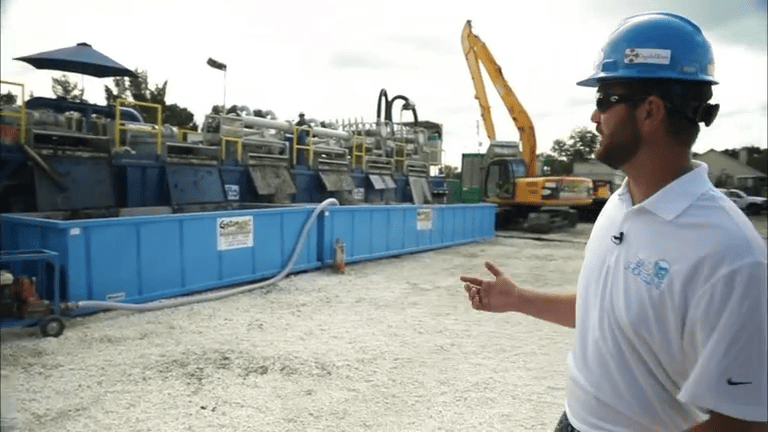
In Florida’s Crystal River and Kings Bay, decades of accumulated muck and dense mats of Lyngbya covered portions of the natural sandy bottom. Restoration crews removed this material before planting native eelgrass.
A Triflo ES 2000R was used as a separation stage within the restoration process, helping crews manage the muck, vegetation, sediment, and water removed from the river.
Once the natural bottom was cleared, native eelgrass could be replanted. The restored vegetation provides an important food source for manatees and creates habitat for fish, turtles, crabs, and other aquatic wildlife.
Sediment Recovery and Beneficial Reuse
Dredged sediment does not always have to be treated entirely as waste. When suitable material can be separated from muck, debris, and other solids, it may be reused as part of the project.
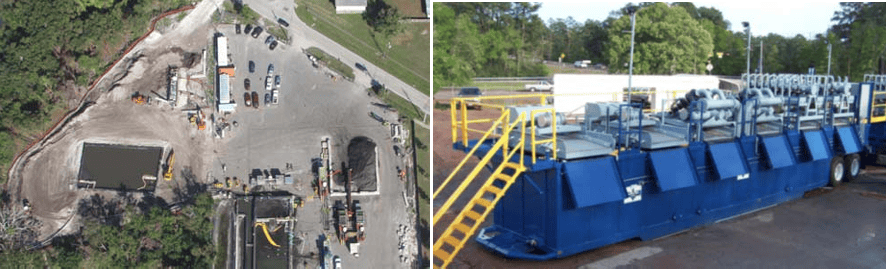
Stevenson Creek in Clearwater, Florida, had accumulated decades of sediment and organic material associated with stormwater runoff, wastewater discharges, and the loss of surrounding wetlands. Reduced depth and flow affected water quality, natural habitat, recreational use, and the overall health of the estuary.
Under the revised restoration scope, approximately 90,000 cubic yards of sediment were removed from the creek.
At the Overbrook Avenue dewatering site, a Triflo ES 2000R separated sand and debris from the dredged slurry using shaker screens and hydrocyclones. Recovered sand was stockpiled or pumped back to designated restoration areas.
The separated sand helped create approximately 15,488 square yards of new mangrove habitat, demonstrating how mechanical dewatering can recover useful material while supporting a larger environmental-restoration objective.
Contaminated-Sediment and Spill Remediation
When oil, diesel fuel, or another contaminant enters a pond or waterway, some of it may settle into shoreline sand and bottom sediment. Recovering the visible product from the surface may therefore be only the first stage of the cleanup.
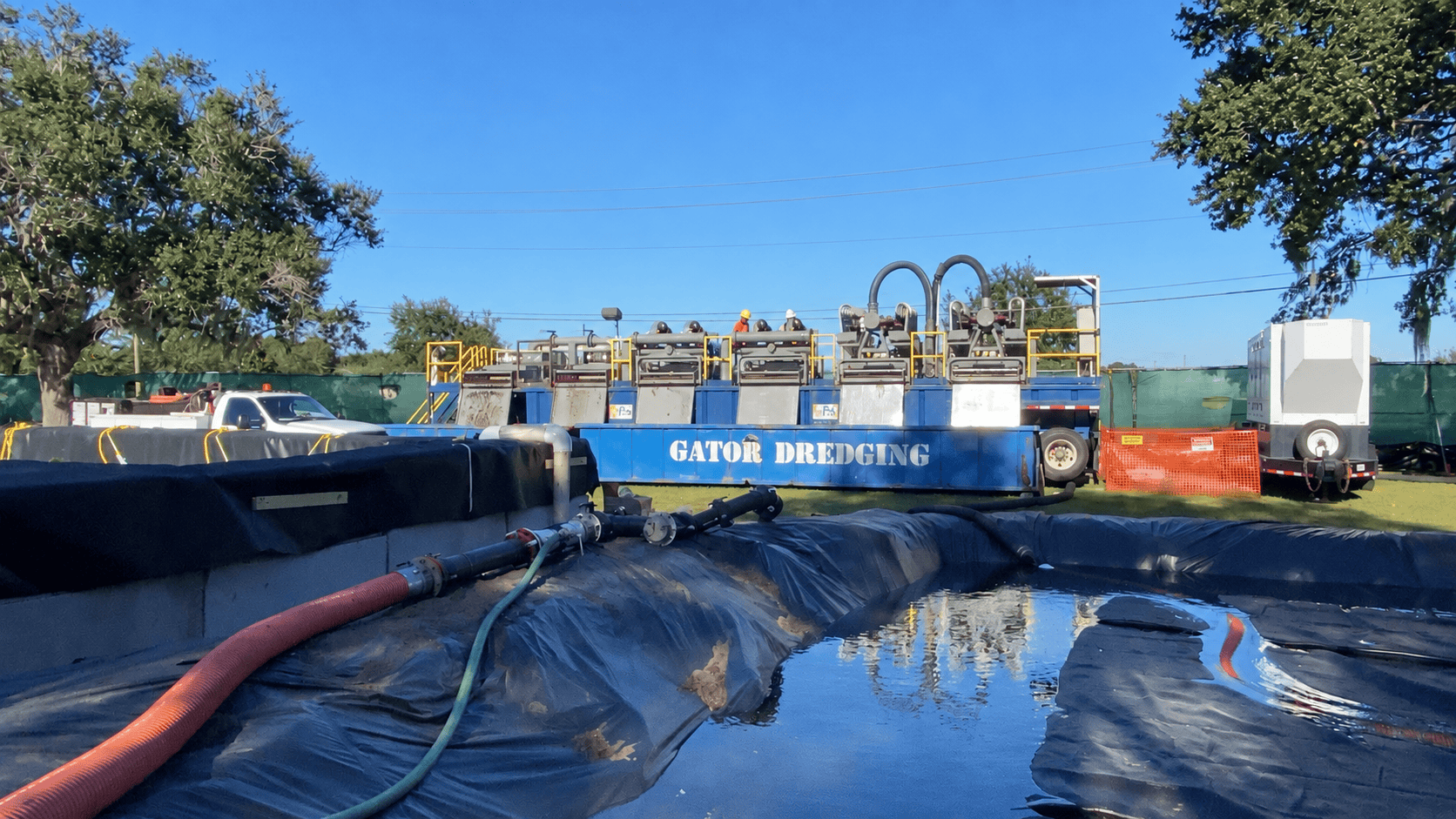
On July 13, 2020, a float-valve malfunction on an emergency-generator fuel tank at Winter Haven Hospital discharged an estimated 491 gallons of dyed diesel fuel into an open storm drain leading to Lake Martha.
The incident prompted an immediate emergency cleanup and a public health advisory. Although much of the fuel was recovered using specialized equipment, diesel residue remained in the sand and substrate along portions of the shoreline. Removing the remaining contamination required a more intensive dredging operation.
A Triflo ES 2000R was used to process the dredged shoreline slurry. The system separated sediment and debris from the water, helping the remediation team manage the contaminated material as part of the larger cleanup operation.
Read coverage of the initial Lake Martha incident.
View the City of Winter Haven agenda documenting the Lake Martha remedial work.
Pond, Lagoon, and Basin Cleanouts
Stormwater ponds, retention ponds, process-water basins, and treatment lagoons are designed to collect or manage water. Over time, sand, silt, muck, vegetation, organic matter, and other solids settle to the bottom and reduce the available capacity.
This accumulation can interfere with water storage, treatment processes, stormwater management, or the pond’s intended environmental function.
Mechanical dewatering allows the accumulated material to be pumped from the pond or lagoon and processed continuously. Separating water from the solids reduces the volume of wet material requiring storage or transportation and helps return the pond, basin, or lagoon to useful service.
The equipment configuration can be adjusted for the material being removed, whether the waste stream contains mostly sand and silt or a heavier mixture of muck, vegetation, and organic matter.
Agricultural Waste Dewatering
Agricultural operations can generate high-volume waste streams containing livestock manure, poultry waste, bedding, feed, fiber, sediment, and other organic material. These waste streams often contain enough water to make transportation, storage, treatment, and energy recovery more difficult.
A mechanical dewatering system separates excess water from the agricultural waste and prepares a more concentrated organic material stream for its next use.
Depending on the operation, the dewatered organic material may be:
- Sent to a biogas system
- Used in an anaerobic-digestion process
- Composted
- Managed through an approved nutrient-recovery or land-application program
- Processed into another agricultural product
When the material is used for biogas production, dewatering prepares the waste before it enters the biogas process. The concentrated organic material is then fermented under oxygen-free conditions, and methane-rich gas produced during that process is collected for renewable-energy use.
The recovered liquid can be routed according to the operation’s water- and nutrient-management plan.
The appropriate dewatering configuration depends on the type of agricultural waste, water content, solids concentration, fiber and bedding content, required processing rate, and requirements of the downstream biogas or material-management system.
Industrial Sludge and Process-Water Recovery
Industrial tanks, pits, process-water ponds, sumps, and containment areas can accumulate sand, scale, sludge, grit, and other solids that interfere with their intended operation.
Environmental dewatering equipment can process these waste streams during tank cleaning, pit remediation, sludge recovery, process-water maintenance, and scheduled facility cleanouts.
Separating solids from the water can:
- Reduce the volume of wet material requiring haul-off
- Recover water for continued use within an approved process
- Concentrate sludge for transportation or additional treatment
- Remove sand, scale, and grit from process-water streams
- Help return tanks, pits, and ponds to service
Industrial slurry varies considerably, so equipment must be matched to the material’s density, viscosity, abrasiveness, particle sizes, solids loading, and chemical compatibility.
Ports, Marinas, Canals, and Navigation Channels
Ports, marinas, canals, and navigation channels require adequate depth for safe vessel movement. Sand and sediment carried by tides, currents, runoff, erosion, and vessel activity gradually settle in these areas.
Hydraulic dredging combined with mechanical dewatering allows contractors to remove and process this material continuously. Mobile equipment can be positioned near the dredging operation, reducing the distance slurry must travel and helping crews work within restricted waterfront sites.
Recovered sand or sediment may be reused when suitable, while the remaining material can be transported or managed according to the project plan.
What Are the Benefits of Mechanical Environmental Dewatering?
Environmental dewatering provides a controlled way to manage high-volume waste streams while supporting the broader goals of a cleanup, restoration, agricultural, or industrial project.
Potential benefits include:
- Recovering water for reuse or recirculation
- Reducing the volume and weight of material requiring transportation
- Producing concentrated solids that are easier to collect and manage
- Supporting beneficial reuse of recovered sand or sediment
- Preparing agricultural waste for biogas or anaerobic-digestion systems
- Allowing continuous processing during hydraulic dredging
- Reducing the space required for slurry storage
- Helping manage suspended solids within the project’s water-control process
- Supporting the removal of muck, vegetation, and organic material
- Restoring capacity in ponds, lagoons, tanks, and navigation channels
- Supporting aquatic-habitat and waterway restoration
- Reducing unnecessary water loss during material removal
The most important benefit depends on the project. A restoration project may prioritize habitat recovery and sediment reuse. An agricultural operation may need to prepare manure or organic waste for biogas production. An industrial facility may focus on recovering process water and reducing sludge haul-off.
What Does a Dewatering System’s Micron Rating Mean?
A micron, written as µm, is one-thousandth of a millimeter. Micron ratings describe the approximate particle sizes targeted by solids-separation equipment.
Shaker screens and hydrocyclones perform different functions:
- A shaker physically separates material according to the openings in the installed screen.
- A hydrocyclone separates particles using centrifugal force, particle density, and fluid behavior.
A hydrocyclone cut point represents the approximate particle size the equipment is designed to target under appropriate operating conditions. It is a performance measurement rather than an absolute filter barrier.
Actual separation performance can be affected by:
- Particle size, shape, and density
- Slurry viscosity
- Solids concentration
- Organic and fiber content
- Hydrocyclone feed pressure
- Flow rate through the system
- Screen selection and condition
- Equipment configuration
- Consistency of operation
Depending on the model and configuration, current Triflo ES Series equipment offers rated cut points from approximately 10 to 24 microns.
How Do You Select an Environmental Dewatering System?
The appropriate environmental dewatering system is determined by the material, required processing rate, site conditions, and intended destination of the recovered streams—not flow rate alone.
Important selection factors include:
- Required processing rate: The equipment must keep up with anticipated continuous flow and short-term surges.
- Solids concentration: Heavy solids loading can affect screen capacity, pump performance, and production.
- Particle-size distribution: Roots, vegetation, gravel, sand, silt, and fine organic material require different separation stages.
- Material characteristics: Density, shape, abrasiveness, fiber content, viscosity, and organic content affect how the slurry behaves.
- Required cut point: The targeted particle size helps determine the hydrocyclones and screens.
- Downstream process: Material being prepared for biogas production may have different requirements than sediment being recovered for habitat restoration or disposal.
- Tank capacity: Adequate onboard volume helps the system manage changing flow and solids conditions.
- Pump requirements: Pumps must provide the correct flow and pressure for the hydrocyclones and circulation system.
- Available footprint: Waterfront sites, farms, industrial facilities, and urban projects may have limited staging space.
- Mobility requirements: Skidded, trailer-mounted, and rockover configurations provide different transportation and setup options.
- Available power: The site must support the shakers, pumps, controls, lighting, and supporting equipment.
- Material-management plan: The destination of the recovered water, mineral solids, and organic material should be established before processing begins.
Testing representative material can provide useful information about particle sizes, solids concentration, screen performance, and expected separation behavior before the final system configuration is selected.
How Does the Triflo ES Series Support Environmental Dewatering?
Triflo ES Series environmental dewatering systems integrate shaker screens, hydrocyclones, pumps, tanks, and controls into multi-stage mechanical separation platforms.
The shaker and hydrocyclone stages perform mechanical separation without requiring chemical coagulants. If a project calls for additional water conditioning or material treatment, the ES system can serve as the high-volume mechanical separation stage within the larger process.
Current ES Series models include:
- The ES 300 processes up to 300 GPM with a rated cut point down to 10 microns. Its compact configuration supports remediation, agricultural processing, industrial cleaning, wastewater, and space-constrained projects.
- The ES 500 processes up to 500 GPM with a rated cut point down to 10 microns for moderate-flow dredging, pond cleanouts, waste processing, and remediation.
- The ES 1000R processes up to 1,000 GPM with a rated cut point of 24 microns. Its rockover configuration supports mobility and efficient setup on larger projects.
- The ES 2000R processes up to 2,000 GPM with a rated cut point of 24 microns for high-volume dredging, restoration, remediation, agricultural waste, and industrial applications.
Systems can be configured around the slurry characteristics, separation goals, downstream process, site constraints, power requirements, and preferred equipment layout.
Frequently Asked Questions About Environmental Dewatering
Is Environmental Dewatering the Same as Dredging?
No. Dredging removes sediment and accumulated material from a body of water. Environmental dewatering processes the slurry created by dredging by separating the removed solids from the water. The two processes frequently operate together.
What Materials Can an Environmental Dewatering System Process?
Depending on its configuration, a system can process waste streams containing vegetation, roots, debris, gravel, sand, silt, muck, sludge, manure, bedding, fiber, scale, and organic material.
Does Mechanical Dewatering Require Chemicals?
The shaker and hydrocyclone stages in a Triflo environmental dewatering system separate solids mechanically without requiring chemical coagulants. Additional conditioning or treatment can be incorporated when required by the material or project plan.
Can Recovered Water Be Returned to a Pond or Waterway?
Recovered water may be reused, recirculated, further treated, or returned when it meets the project specifications and applicable permit requirements. Sampling and monitoring help confirm that the water-management process is performing as intended.
What Happens to the Separated Material?
Separated material may be reused, stockpiled, transported, treated, composted, sent to a biogas system, managed through an approved nutrient program, or taken to an authorized disposal facility. The appropriate destination depends on the material and project requirements.
Which Projects Benefit Most From Mechanical Dewatering?
Mechanical dewatering is especially valuable on projects that continuously generate high-volume waste streams and need to recover water, concentrate solids, prepare organic material for further processing, reduce wet-material handling, or operate within a restricted footprint.
Turning Environmental Waste Streams Into Manageable Resources
Environmental dewatering turns difficult mixtures of water and solids into separate streams that can be managed and used more effectively.
It can recover sand for habitat creation, remove muck and vegetation from sensitive waterways, process contaminated sediment, restore capacity in ponds and lagoons, prepare agricultural waste for biogas production, and recover water from industrial sludge.
The most effective system is one matched to the actual material, required processing rate, target particle sizes, downstream process, site conditions, and project objectives. With the appropriate separation stages in place, mechanical dewatering can support water recovery, responsible material management, beneficial reuse, renewable-energy production, and meaningful environmental restoration.